
The Challenge
● Organizations face growing pressure to use digital tools but often lack the capacity to do so responsibly ● Awareness of opportunities and risks is growing, but clear guidance, policies, and support are missing ● Leaders are making decisions about implementation, risk, and trust without a strong foundation ● Funders and partners face similar gaps in understanding how these technologies are used in practice Bridge AI is designed to address this gap

What This Program Is
● Bridge AI is a program for nonprofit leaders, staff, and funders focused on responsible AI adoption ● It builds shared capacity across the sector while giving funders. and partners a clearer view of nonprofit realities ● Pairs structured learning with real-world application through case studies, scenarios, and take-home tools ● Delivered as part of RBC’s broader initiative to strengthen leadership and digital capacity across Canada’s nonprofit sector
Why This Matters
● Responsible use of AI depends on how organizations, funders, and partners understand and approach these technologies together, especially where nonprofits serve vulnerable and underserved communities ● Building shared capacity strengthens organizational sovereignty, enabling nonprofits to make informed, independent decisions about AI use rather than relying on external pressures or default tools ● Grounded in a public interest approach, the program aligns actors across the sector on risks, responsibilities, and practical pathways for accountable and equitable AI use in organizational contexts

What You Gain
AI Understanding
Gain a practical understanding of what AI can and cannot do within nonprofit contexts.
Tools and Decision-Making Frameworks
Access templates, policy frameworks, and decision-making tools to evaluate and apply AI in your work.
Digital Leadership & Confidence
Strengthen your ability to lead responsible AI initiatives while building confidence through real-world scenarios and peer connection.
The syllabus
-
1
Foundations of Responsible Digital Leadership
-
(Included in full purchase)
Urgency of digital & AI transformation for nonprofits
-
(Included in full purchase)
The “imagination gap” in AI adoption
-
(Included in full purchase)
Systems thinking: tech in social, organizational, and power contexts
-
(Included in full purchase)
Trust, equity, and culturally relevant leadership
-
(Included in full purchase)
Leadership responsibilities in shaping responsible AI use
-
(Included in full purchase)
-
2
Understanding AI & Algorithmic Systems
-
(Included in full purchase)
AI fundamentals: models, capabilities, limitations
-
(Included in full purchase)
Algorithmic influence on visibility, engagement, and decision-making
-
(Included in full purchase)
Risks: bias, hallucinations, misinformation, copyright, privacy
-
(Included in full purchase)
Societal impacts of AI on nonprofits and communities
-
(Included in full purchase)
Common nonprofit AI use cases
-
(Included in full purchase)
-
3
AI Governance & Opportunity Analysis
-
(Included in full purchase)
Organizational AI readiness: culture, skills, governance, trust
-
(Included in full purchase)
Opportunity mapping: automation vs. augmentation
-
(Included in full purchase)
Ethical trade-offs and equity considerations
-
(Included in full purchase)
Early AI use principles and leadership guardrails
-
(Included in full purchase)
-
4
Data Practices & Regulatory Compliance
-
(Included in full purchase)
Data governance principles: privacy, consent, accountability
-
(Included in full purchase)
Canadian regulatory context (AIDA, PIPEDA, provincial laws)
-
(Included in full purchase)
International precedents (EU AI Act, GDPR, US AI Bill of Rights)
-
(Included in full purchase)
Sector-specific risks (youth, health, Indigenous data sovereignty)
-
(Included in full purchase)
Compliance as a trust-building leadership practice
-
(Included in full purchase)
-
5
Building Digital Resilience & Cybersecurity
-
(Included in full purchase)
Recognizing and managing risks such as bias, misinformation, and system vulnerabilities
-
(Included in full purchase)
Cybersecurity basics: phishing, ransomware, passwords, backups
-
(Included in full purchase)
Platform dependency and vendor lock-in risks
-
(Included in full purchase)
Data ownership and copyright in AI systems
-
(Included in full purchase)
Operational continuity and recovery planning
-
(Included in full purchase)
Building a culture of shared digital responsibility
-
(Included in full purchase)
-
6
Strategic Adoption & Leadership Foresight
-
(Included in full purchase)
Adaptive leadership during technological disruption
-
(Included in full purchase)
Procurement frameworks: buy vs. build vs. avoid
-
(Included in full purchase)
Futures thinking and scenario planning for nonprofits
-
(Included in full purchase)
Board, staff, and volunteer capacity-building for AI adoption
-
(Included in full purchase)
Aligning innovation with mission, trust, and accountability
-
(Included in full purchase)
-
7
Applied Tools, Case Studies & Next Steps
-
(Included in full purchase)
Applied AI tool demos and nonprofit case studies
-
(Included in full purchase)
Inclusive and culturally relevant adoption practices
-
(Included in full purchase)
Measuring impact: AI readiness, confidence, and risk
-
(Included in full purchase)
Applying responsible AI frameworks to real tools
-
(Included in full purchase)
Knowledge-sharing and sector-wide learning
-
(Included in full purchase)

How It Works
● Cohort-based groups of 20 to 25 participants ● Fully online delivery ● 4 live sessions on Thursdays (May 28, June 4, 11, 18), 12–2 PM ET ● Case studies and applied exercises ● Access to a resource hub with tools and templates ● Pre- and post-program reflection and assessment

Who It’s For
● Nonprofit leaders and executive teams ● Staff and program managers ● Funders and ecosystem partners ● Organizations exploring or already using AI ● No technical background is required.
Facilitators
This program is delivered by a team with experience in digital literacy, responsible AI, and nonprofit capacity building.

Renee Black | CEO, GoodBot
Renee Black is the CEO of GoodBot, where she leads work on digital literacy, responsible technology, and public-interest AI. She designs and delivers programs that help organizations understand how digital systems shape outcomes, with a focus on building practical capacity for responsible adoption. She previously led PeaceGeeks, an international nonprofit focused on technology for social good. Her work spans partnerships across civil society, government, and the private sector. She is an active contributor to the responsible tech ecosystem, including conference presentations and cross-sector dialogue on platform governance, digital resilience, and ethical AI.

Norman Valdez | CEO, BrainTrainr
Norman Valdez is the CEO of BrainTrainr, a platform focused on building practical AI literacy and digital skills. He has worked with over 100 nonprofit organizations to support learning, capacity building, and technology adoption through accessible, applied training programs. His work focuses on translating complex AI concepts into clear, usable knowledge. Through BrainTrainr, he supports organizations in understanding how AI tools can be used in practice while building awareness of risks, limitations, and responsible use.
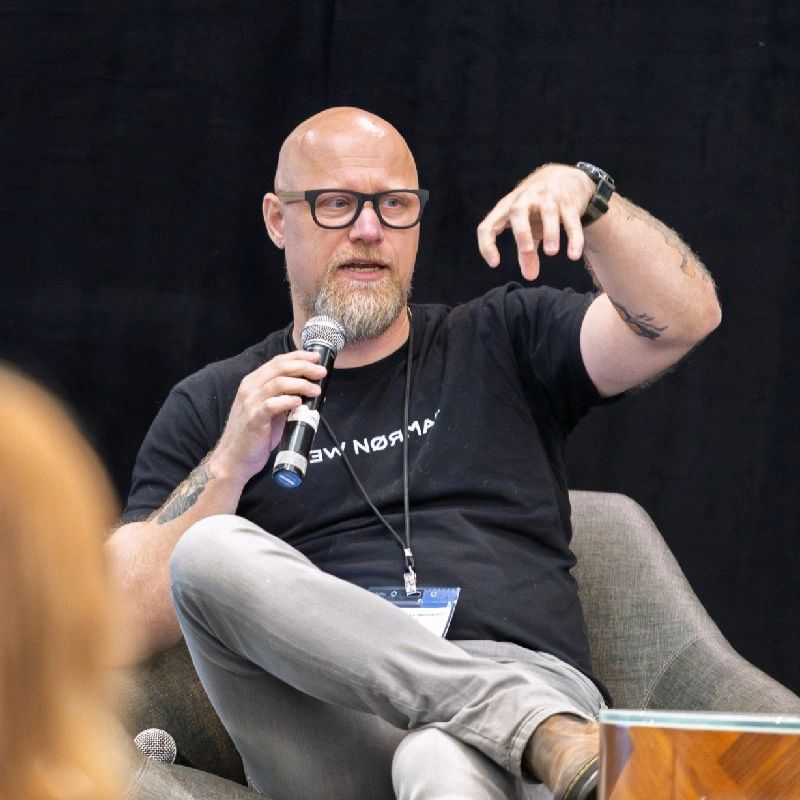
Alex Tveit | CEO, Sustainable Impact Foundation
Alex Tveit is the CEO of the Sustainable Impact Foundation, where he works at the intersection of technology, sustainability, and systems change. His work focuses on helping organizations adopt emerging technologies in ways that align with long-term social and environmental goals. He brings experience in partnership development and ecosystem building, supporting organizations to navigate digital transformation in a structured and responsible way. His perspective connects AI adoption to broader questions of impact, resilience, and equity.
Partners
Bridge AI is developed and delivered through collaboration between organizations working across digital literacy, AI education, and community engagement.

GoodBot
GoodBot leads curriculum design and program development, drawing on its work in digital literacy, responsible technology, and public-interest AI. Its approach combines systems thinking with applied learning to help organizations understand how digital systems shape outcomes, and to build the capacity needed for responsible and informed decision-making.
BrainTrainr
BrainTrainr supports platform delivery and AI literacy instruction, bringing experience in designing accessible, interactive learning environments. With a track record of working with nonprofit organizations, BrainTrainr focuses on translating complex technologies into practical skills and tools that participants can apply in their day-to-day work.

Sustainable Impact Foundation
The Sustainable Impact Foundation supports outreach, partnership development, and ecosystem engagement. Its work focuses on connecting organizations, building collaborative networks, and ensuring that technology adoption is aligned with long-term social and environmental impact.

Supported by
This program is supported in part by RBC as part of its broader initiative to strengthen leadership and digital capacity across the nonprofit sector. This support helps expand access and enables the development of shared tools and resources.
Take the First Step
If your organization is looking to build a more informed and responsible approach to AI, this program is a place to start.
FAQ
-
●
No. The program is designed for all levels and familiarity
●
4 sessions, 2 hours each, plus light preparation and follow-up work
●
Yes. Both leaders and staff are welcome to sign up!
●
Thanks to RBC support we are able to offer the program for free in 2026